Silver, Gold, Platinum, Palladium - Which Precious Metal Suits Your Piece?
The choice of metal determines the look, weight, price, and longevity of a ring. Here are the key differences from a workshop perspective.
Sterling Silver 925
The classic silver standard: 92.5% fine silver, the rest mostly copper. That copper content is exactly the weak point. Sterling silver tarnishes relatively quickly in the air and takes on a yellowish-grey film that needs regular polishing. When heated it also tends to develop firescale - dark copper-oxide discoloration beneath the surface that has to be laboriously removed during finishing. Sterling is common and inexpensive, but maintenance-heavy and more demanding to work with.
Argentium Silver 940
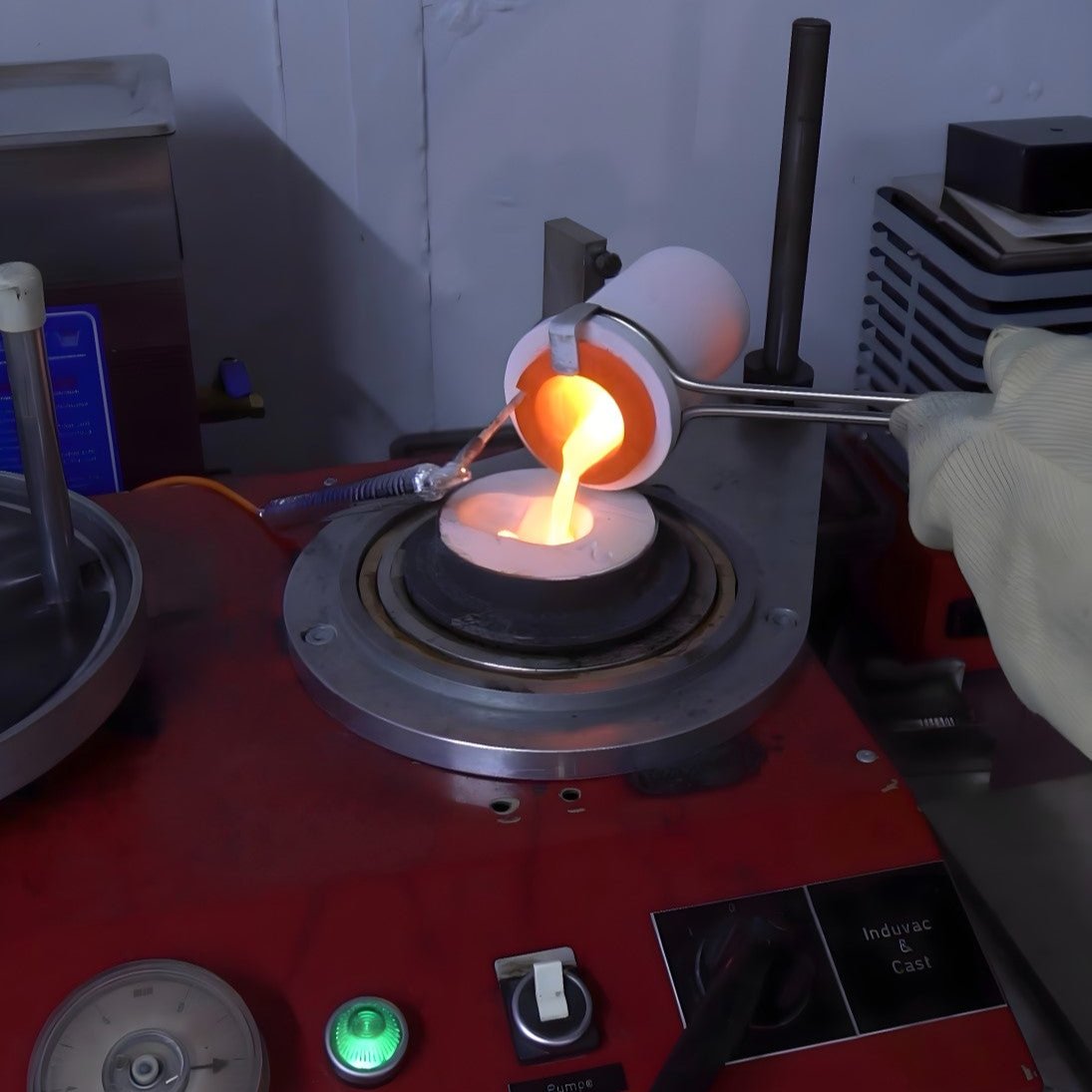
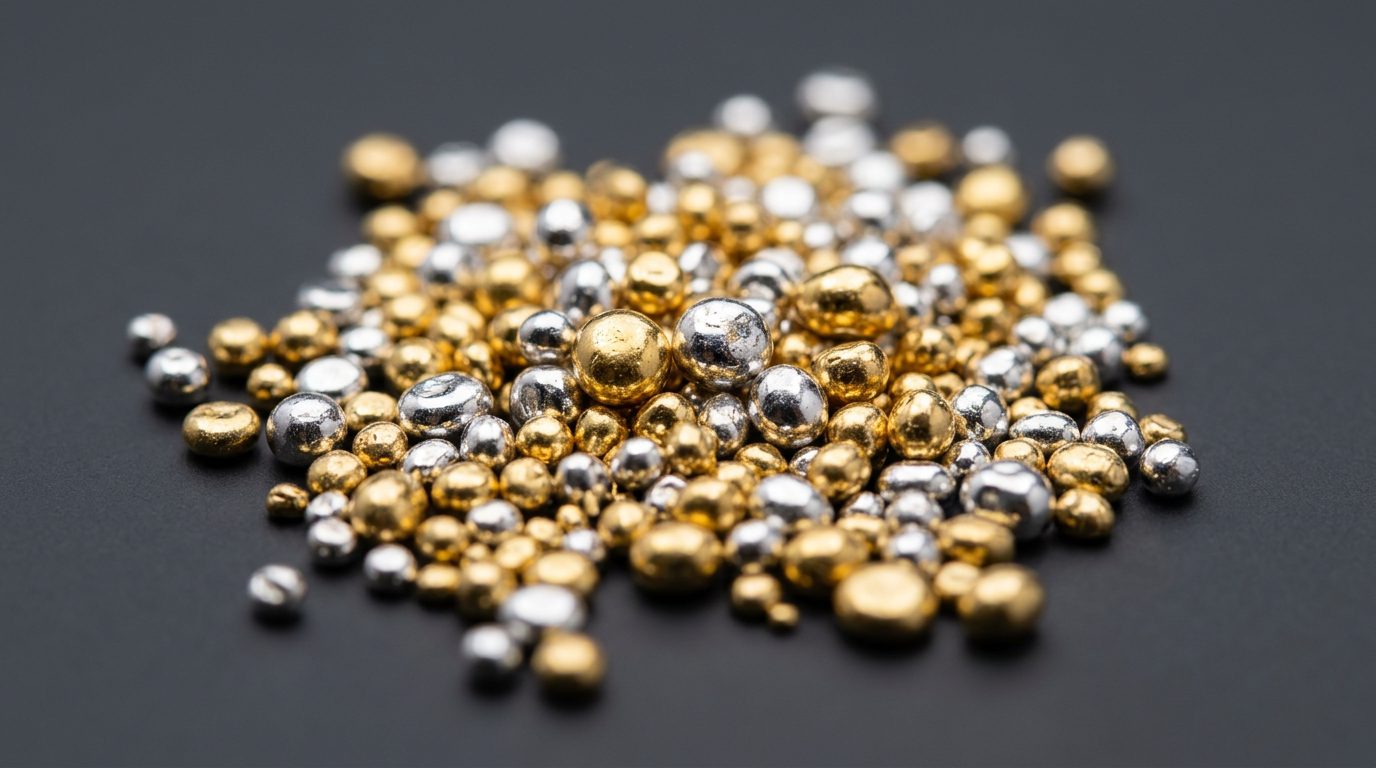
Our recommendation in the silver range - and the material we cast in-house. At 94%, Argentium contains more fine silver than sterling and therefore looks brighter and whiter. The real advantage lies in its germanium content: it forms a self-healing protective layer, so Argentium tarnishes far more slowly, develops no firescale, and is nickel-free on top of that. In practice that means less polishing, cleaner processing, and a material suitable for sensitive skin. If you want to work with Argentium yourself, you can source semi-finished stock and casting grain directly from Argentium Shop Europe; more background in our post Argentium Silver - why we build on this material.
Yellow Gold 585 / 750
The classic. 58.5% or 75% fine gold, with the remainder being silver and copper. Warm-toned, low-maintenance, and easy to work with. It develops a light patina over time - something many people actually appreciate.
White Gold 585 / 750
The same gold content as yellow gold, alloyed with palladium and other elements. Because of the high gold content, white gold doesn't achieve a bright white tone on its own – so it's typically rhodium-plated at the end. The electroplated rhodium layer can wear off over time and should be renewed when it does. Anyone who'd rather avoid that maintenance should consider platinum or silver instead.
Platinum 950
Denser than gold (21.4 g/cm³ versus 15.6 g/cm³ for Gold 750), which makes it noticeably heavier to wear. Over time it develops a matte patina that's widely regarded as a mark of quality.
Palladium 950
Visually similar to white gold. Lighter than platinum (12 g/cm³), and currently priced at a similar level.
Questions about your jewelry project?
Get in touch - we're happy to help.
Nikolas Maier · +49 173 1606010 · [email protected]